From farm fields to the appellate bench: The rise and record of Justice Thaddeus L. Wilson
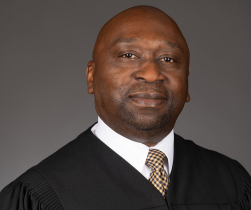
The eldest of five children, Thaddeus L. Wilson was raised in rural South Carolina, where he drove a tractor on his uncle’s farm and worked long days in the fields. He was active in school and church.
“I played piano for the church choir, was captain of the high school concert and marching bands and the trombone first chair and section leader," Wilson said in an interview with Injustice Watch for its 2022 election guide. "I even drove a school bus — back when students were allowed to be bus drivers in South Carolina. I also worked as a summer intern at a local plant making rubber for car tires.”
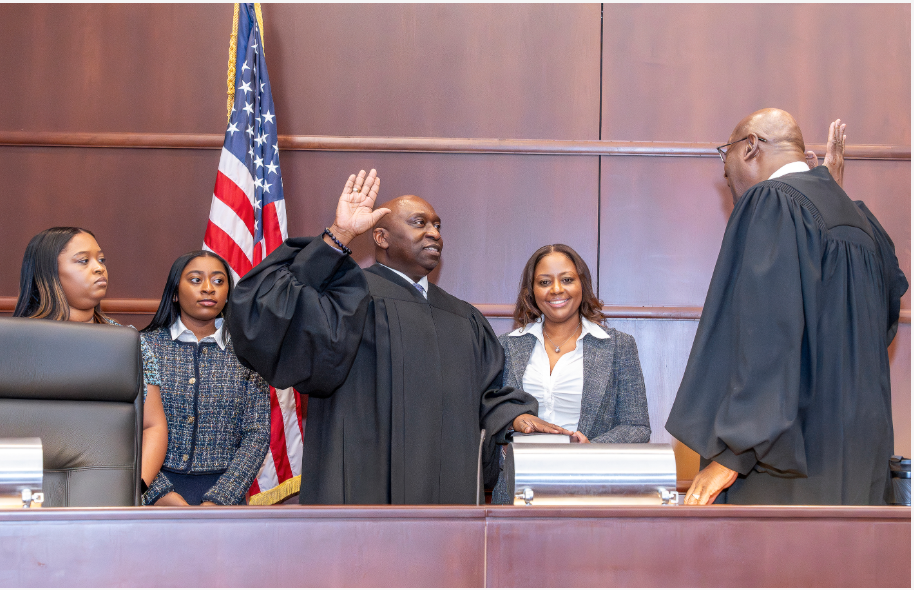
Today, Wilson sits on the second-highest court in Illinois. Sworn in Feb. 6 before an overflow crowd, he filled the vacancy created when Justice Sanjay T. Tailor was elevated to the Illinois Supreme Court.
“At every stage, my goal has remained the same: to help build a justice system that is fairer, smarter, more transparent, and better prepared for the world ahead,” Wilson said in a press statement announcing his First District Appellate Court appointment, which hears appeals from trial courts in Cook County.
“If you’re working at the intersection of law, technology, judicial education, or court innovation, I’m always open to connecting and collaborating.”
But Wilson’s judicial record hasn't been without controversy.
In 2016, he sentenced Donnell Flora to 100 years in prison after Flora was convicted of felony murder and attempted murder for providing his teenage niece with a gun used in a fight that left a 14-year-old girl dead and another teen injured.
An appellate court later reversed the conviction, finding that prosecutors had misrepresented to the jury what was required to prove felony murder — and that Wilson improperly allowed it.
Wilson defended his original ruling, stating that the sentence fell within statutory guidelines and that consecutive sentences were legally required. He also noted that the appellate court found sufficient evidence to convict Flora, who ultimately pleaded guilty to a reduced charge and received a 20-year sentence.
In September 2019, after a 20-year-old woman who worked at a grocery store failed to appear as a witness for a pretrial hearing in a murder case, Wilson ordered her sent to jail without bail. The Illinois Appellate Court reversed Wilson, finding his ruling unreasonable. Wilson then ordered the witness, who had no criminal record, to be held on $100,000 cash bond.
The appellate court again reversed Wilson. The witness ultimately was let out of jail on a $750 cash bond after spending two weeks behind bars and missing work.
Wilson came to the law after a career in technology. He earned his Bachelor of Business Administration from the University of Notre Dame in 1989, double majoring in Management of Information Systems and Philosophy. He then worked in Chicago as a computer programmer and systems analyst for Joseph T. Ryerson & Son.
After earning his law degree from Northern Illinois University College of Law in 1994, Wilson entered private practice, working for Chicago Alderman Howard Brookins Jr. and representing clients in criminal, civil, and bankruptcy matters.
Appointed to the bench in 2007, Wilson was elected to his first full term as a circuit judge in 2010. He served in the criminal division before transferring to the chancery division in December 2021.
Wilson is widely regarded as knowledgeable and meticulous in the courtroom.
Attorneys have praised his leadership in transitioning to virtual proceedings at the onset of the pandemic, according to Injustice Watch. However, some have described Wilson as excessively punitive, temperamental, and inflexible and privately welcomed his move out of the criminal division.
In response to criticism, Wilson has been blunt.
“It should not be a shock or news flash to any judge that there are some attorneys who don’t like them for some reason or another,” he wrote. “Just like it should come as no surprise that there are school teachers, professors, and news reporters that some people just don’t like and wish were gone.”
Wilson’s rise from rural South Carolina to the appellate bench reflects discipline and ambition. His record, however, underscores a central tension in the justice system: the line between firmness and excess, discretion and overreach.
As he takes his seat on one of Illinois’ most powerful courts, the question is no longer simply how he runs a courtroom — but how his judicial philosophy will shape the law itself. Appellate judges do more than decide individual cases; they influence precedent, define standards, and signal to trial courts what justice should look like.
For supporters, Wilson represents experience and structure. For critics, his history raises concerns about proportionality and restraint. On the appellate bench, those instincts will not simply affect individual defendants — they will help determine how justice is administered across Cook County and beyond.