Seventeen Men + 383 Years in Prison = a $260.8 Million Settlement
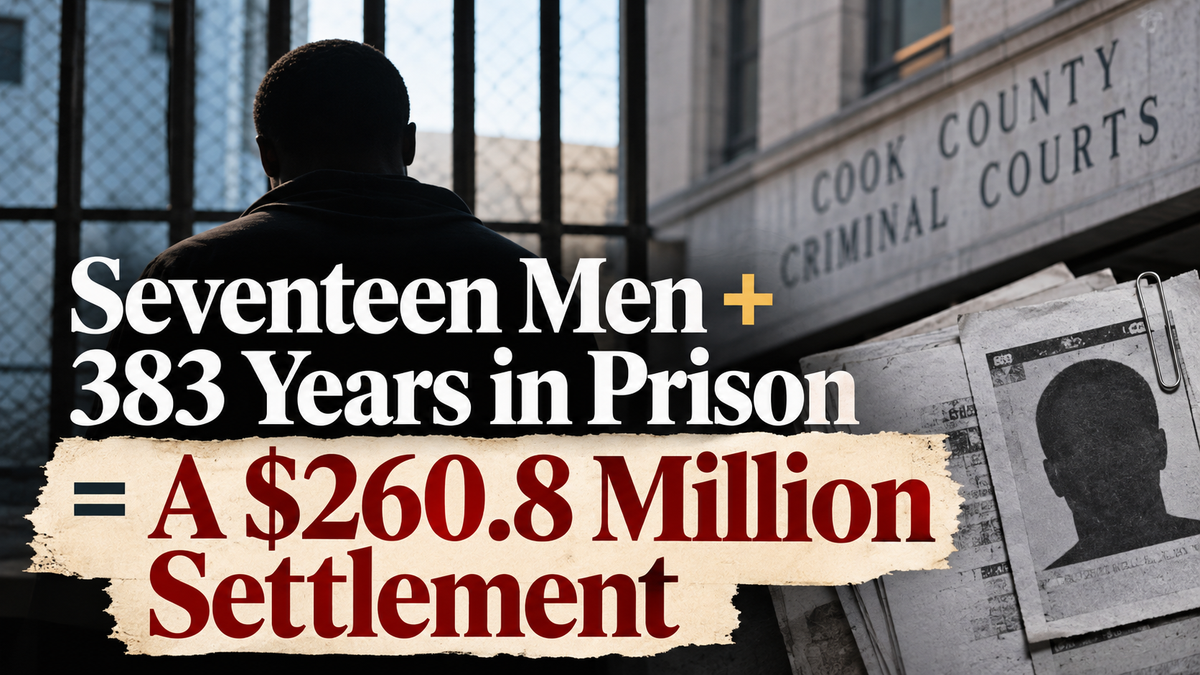
In what plaintiffs' attorneys call the largest police misconduct settlement in U.S. history, Chicago agrees to compensate 17 men whose murder convictions were overturned after decades behind bars.
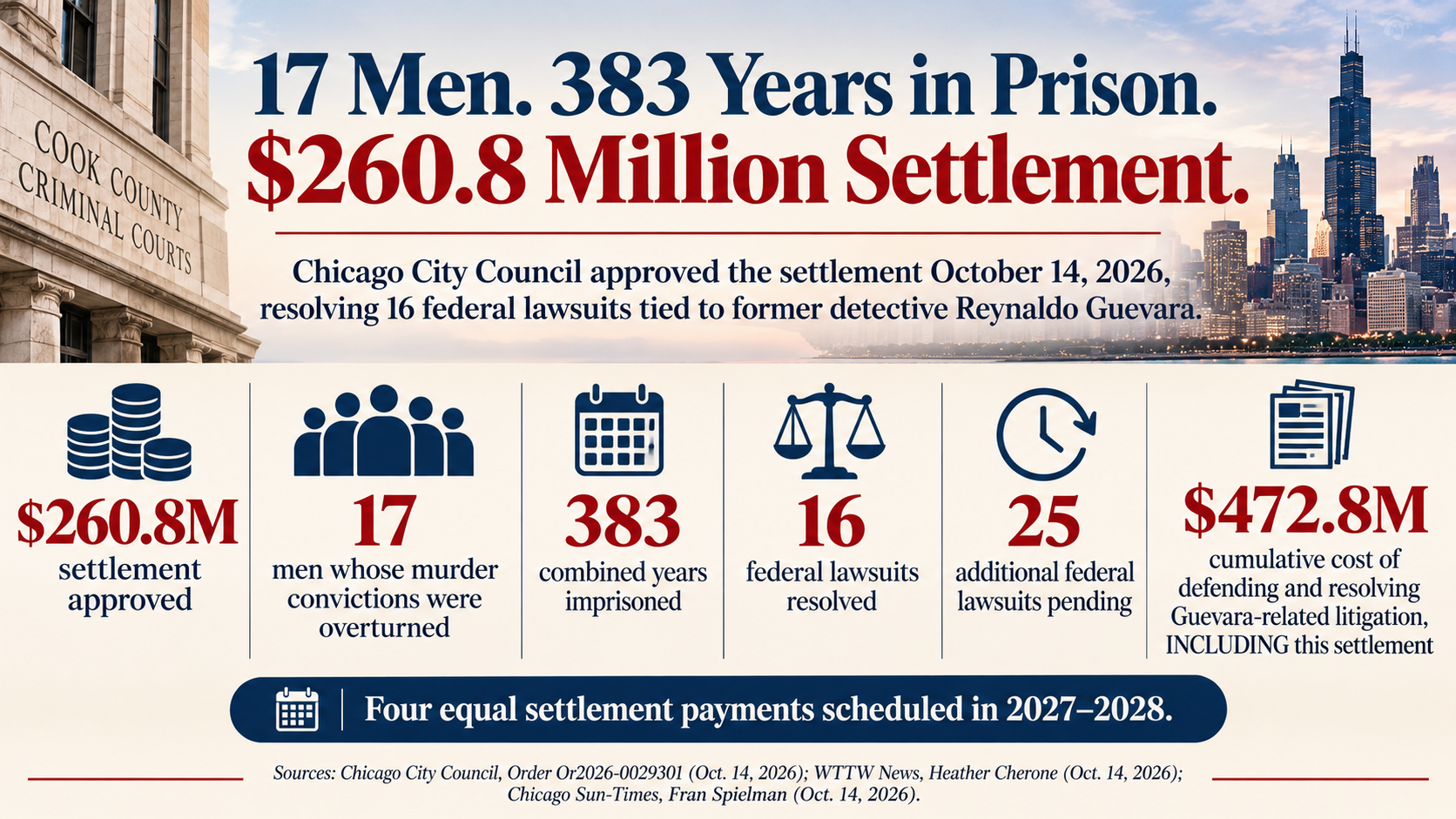
The Chicago City Council approved a $260.8 million settlement on October 14 to resolve 16 federal lawsuits brought by 17 men whose murder convictions were overturned after they spent a combined 383 years behind bars.
The vote marks another costly chapter in the scandal surrounding former Chicago police detective Reynaldo Guevara, whose investigations during the 1980s and 1990s have been linked to dozens of wrongful convictions.
The men were between 14 and 28 years old when arrested. On average, they spent more than 22 years each behind bars. Fifteen have received certificates of innocence.
Guevara has been repeatedly accused of coercing witnesses, fabricating evidence, falsifying police reports and framing suspects. Many of those convicted were Latino men from Chicago's Humboldt Park neighborhood.
The Men Behind the Settlement
Antonio Spraggs was 21 when he was arrested in 1997. According to his attorneys, Guevara framed him for murder after Spraggs refused to falsely identify another man in an unrelated shooting. Spraggs served 23 years of a 59-year sentence before his conviction was overturned.
“This isn’t about money, it’s about justice,” Spraggs said in an October 14 press statement issued by Loevy + Loevy, the law firm representing the plaintiffs.
Among the settlement recipients is Tyrece Williams, who spent more than 18 years in prison for a 1990 murder he maintained he did not commit.
In March 2025, Cook County Circuit Court Judge Carol Howard overturned his conviction after a key prosecution witness testified that Guevara physically abused and threatened him into falsely identifying Williams as the killer.
Prosecutors challenged the witness's credibility, citing his contradictory statements and identifications made by other witnesses. Howard found that no physical evidence connected Williams to the shooting, according to the National Registry of Exonerations.
But Williams faced another legal battle. According to reporting by Injustice Watch, prosecutors under Cook County State's Attorney Eileen O'Neill Burke opposed his petition for a certificate of innocence, arguing that he had not established his innocence.
On July 7, 2026, Judge Erica Reddick granted the certificate over their objections. The designation allows Williams to seek compensation from the state and have records of the conviction expunged, providing legal recognition of his innocence beyond the reversal of his conviction.
A Growing Financial Toll
The settlement brings Chicago's total cost of defending and resolving 57 lawsuits involving Guevara to approximately $472.8 million, including settlement payments and litigation expenses, according to an October 14 analysis by WTTW News.
Thirty-two lawsuits have been resolved, while another 25 remain pending in federal court.
The latest settlement will be paid in four installments during 2027 and 2028. Attorneys representing the plaintiffs are expected to receive approximately 40% under their fee agreements.
“While we can never undo the harm or give them back the years that they lost, we can provide some measure of restitution and help these individuals move forward,” Mayor Brandon Johnson said following the vote.
His administration estimated that resolving the cases collectively would save taxpayers between $300 million and $400 million compared with the potential costs of continued litigation and jury verdicts.
Questions of Accountability
Attorney Russell Ainsworth of Loevy + Loevy said the misconduct extended beyond Guevara to other detectives and supervisors who allegedly participated in or tolerated coercive interrogations.
“Guevara was a symptom of a much bigger problem: a culture of impunity within the Chicago Police Department,” Ainsworth said in the firm's October 14 statement.
The allegations also raise questions about the conduct of individual officers and about what Chicago officials knew, when they knew it, and whether information that might have helped defendants challenge their convictions was disclosed.
Questions about Guevara's investigative practices reached the Illinois Appellate Court two decades ago. In a 2006 ruling involving Arturo Reyes and Gabriel Solache, who alleged that Guevara beat them into confessing to a double murder, the court examined 23 allegations of misconduct submitted in support of Solache's post-conviction petition. The allegations included physical abuse of suspects and efforts to coerce witnesses into identifying suspects.
Before trial, Solache's attorney subpoenaed police misconduct records involving Guevara, but the trial judge reviewed seven files privately, deemed them irrelevant and denied the defense access to their contents.
The circuit court had summarily dismissed both men's petitions, but the appellate court reversed, finding that the allegations were sufficient to allow their constitutional claims to proceed to the next stage of post-conviction review. The court noted that evidence of similar misconduct could undermine Guevara's credibility and corroborate the defendants' claims that their confessions were coerced.
The appellate court also ordered the cases reassigned to another judge, concluding that the original trial judge appeared to have prejudged whether the new evidence warranted relief.
The ruling did not overturn the convictions, but it demonstrated how evidence of misconduct in other investigations could raise questions about the reliability of confessions used to secure convictions.
Despite the numerous overturned convictions, Guevara has never been criminally charged in connection with the alleged misconduct. He has repeatedly invoked his Fifth Amendment right against self-incrimination when questioned about his investigations and continues to receive a police pension.
Chicago officials commissioned an investigation into Guevara's conduct in 2013, eight years after his retirement. That investigation cost approximately $1.9 million, but its findings have never been publicly released.
In August 2022, then-Cook County State's Attorney Kim Foxx said her office was reviewing possible criminal charges against Guevara, although she acknowledged that statutes of limitations could complicate prosecution. Four years later, Guevara has not been charged, and the outcome of that review remains unclear.
Justice Delayed, Questions Unanswered
The settlement resolves 16 lawsuits, but it leaves unanswered questions about how convictions involving the same detective withstood years of appeals and post-conviction challenges.
When did authorities first possess evidence that could have undermined these convictions? And what safeguards exist today to identify similar misconduct before innocent people spend decades in prison?
With 25 lawsuits still pending, Chicago's reckoning with the Guevara investigations is far from over.