Ivy Kelly Is Headed Back to Trial. This Time, There’s More to the Story.

Nearly 27 years after Joseph Ward was killed, Ivy Kelly is preparing for a second murder trial. A Sept. 29 pretrial hearing offered a preview of how different that trial could be.
When Ivy Kelly returns to trial next month on charges that he participated in the 1999 murder of Joseph Ward, prosecutors won't be working with exactly the same evidentiary landscape they had when Kelly was convicted more than two decades ago.
At a Sept. 29 hearing, an assistant Cook County state's attorney acknowledged that additional information from federal authorities has surfaced since Kelly's original prosecution.
“Has the federal government released more information to us than they did to the people back in 1999 or 2000 or 2003? Yes, they have,” the Cook County Assistant State's Attorney Jennifer Cooper told Cook County Circuit Judge Michele Pitman.
She said that information has now been turned over to Kelly's attorneys. But whether the factfinder at Kelly's new trial will hear about all of it is another question.
Much of the Sept. 29 hearing focused on what evidence from the original police investigation could be used at Kelly's new trial.
After a bench trial in 2003, Kelly was convicted of first-degree murder in the 1999 shooting death of Joseph Ward in Robbins. The State’s case relied heavily on pretrial statements from Christopher Lacy and Paula Scott, who implicated Kelly but backed away from key portions of those accounts at trial.
Years of post-conviction litigation followed, eventually focusing on evidence that Lacy had worked as an FBI informant and that Kelly’s trial attorney failed to use that information to challenge his credibility. Kelly’s conviction was ultimately vacated and a new trial ordered. He has remained in custody while awaiting retrial, which is scheduled to begin Nov. 2.
The prosecution's motion in limine'
The arguments centered on a motion in limine prosecutors filed Feb. 6. Such motions ask a judge to decide before trial whether certain evidence or argument may be presented to the factfinder. Here, prosecutors asked Pitman to exclude broad allegations of misconduct involving Robbins police officers and complaints about how long it took for information to reach Kelly's attorneys.
The defense argued that some of the information learned since Kelly's first trial could be relevant to evaluating the witnesses and investigation that produced the case against him.
Pitman largely drew a line between the two.
General complaints about the pace of discovery would not be relevant at the new trial, she indicated. But information newly disclosed to Kelly's attorneys could be.
“I've always said it is relevant to put before any trier of fact the new disclosures in this matter — that's relevant,” Pitman said.
She also left open the possibility that Kelly's attorneys could question witnesses about some allegations involving officers who participated in the investigation.
“I do find in a case like this where there is a new trial, there's so many allegations of corruption and things going on in this police department that this is relevant,” Pitman said.
Pitman said she would consider specific questions and objections as they arise at trial.
The arguments offered a preview of a potentially important difference between Kelly's first and second trials: The new factfinder may have information available that was either not presented in 2003 or was obtained years later.
An original investigator won't testify
One difference is already clear: The State will not call two Robbins police detectives involved in the original investigation.
“I will not be calling Detective Terrence Franklin or Dion Kimble in this case,” she said. Franklin and Kimble were Robbins police detectives involved in the investigation of Ward’s killing.
Kelly's attorneys want to introduce information concerning Franklin and other aspects of the Robbins police investigation even if prosecutors don't call him as a witness.
“We have evidence that we want to introduce that this was a corrupt investigation,” Kelly's attorney Steven Greenberg told Pitman.
Prosecutors argued that much of what the defense wants to introduce concerns allegations, lawsuits and investigations that have not been sufficiently connected to Kelly's case.
Pitman declined to issue a blanket ruling excluding all of the disputed evidence.
“I have already told you that the court's going to let some of this evidence in,” Pitman said. “I do find in a case such as this that some of this is relevant, but it depends on who testifies.”
She reserved a final ruling on that portion of the State's motion.
Records that surfaced years later
Court filings help explain why the question is arising now.
A September 2024 defense motion describes additional federal records that Kelly's attorneys obtained while preparing for his retrial.
According to the motion, Kelly's attorneys asked CCSAO to determine whether a federal investigation known as Operation Double Barrel contained additional documents involving Franklin.
The defense contended that federal documents provided before Kelly's original trial had been specifically limited to the FBI's investigation of another Robbins detective, Jerome McGee.
On April 3, 2024, according to the motion, prosecutors turned over two additional Operation Double Barrel reports that referenced Franklin.
Kelly's attorneys filed a supplemental motion the following day, arguing that the new reports demonstrated that the original production had been incomplete.
The September motion says prosecutors also notified Kelly's attorneys that Franklin had been the target of a separate federal investigation.
The State's Attorney's Office forwarded an FBI email and heavily redacted reports from that investigation on May 23, 2024, according to the defense filing.
Kelly's attorneys said the unredacted portions contained accusations that Franklin engaged in criminal activity in 2001 and 2002, including taking payments from drug dealers for police protection.
Those allegations do not establish that Franklin committed the conduct. The defense filing says he was never charged in connection with them. The same motion says Franklin denied engaging in illegal activity when an assistant state's attorney interviewed him in early 2024.
The chronology also complicates any suggestion that Kelly's original lawyers knew nothing about federal investigations involving the people connected to his case.
Some federal material had been turned over before Kelly's 2003 trial.
The dispute is instead about what was provided, when it was provided, whether the original production was complete and what Kelly's original attorney did with the information he received.
What the first lawyer knew
The question of what Kelly's original attorney knew has already played an important role in the case.
At a September 2022 hearing, attorney Jennifer Blagg told Pitman that evidence produced during post-conviction proceedings showed Kelly's trial attorney had been notified that Lacy was an FBI informant.
“Counsel knew,” Blagg told the court. “Counsel received this paperwork on the day trial started.”
She said Kelly's original attorney nevertheless failed to use the information to challenge Lacy.
Kelly's conviction was eventually vacated and a new trial ordered. A 2023 appellate ruling described evidence concerning Lacy's work for the FBI as “certainly relevant” impeachment material that Kelly's original lawyer had failed to use.
He could have gone home
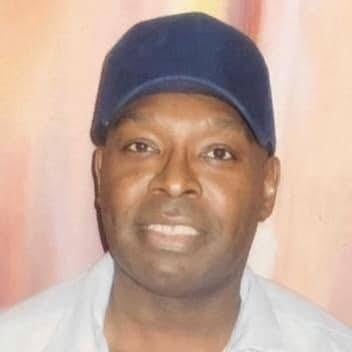
Kelly has remained in custody while the parties prepare for that new trial. Before his conviction was vacated, prosecutors offered him a deal that would have resulted in his release for time served. A transcript from a September 2022 hearing shows prosecutors telling Pitman that Kelly could be released from prison that day if he accepted the offer. Kelly refused.
Blagg told the judge that Kelly “will not admit to something that he did not do.”
Pitman then questioned Kelly directly to make sure he understood what he was turning down.
“I'm innocent,” Kelly told her.
After Kelly's conviction was vacated, prosecutors sought his pretrial detention while awaiting the new trial. Pitman granted the request, and an appellate court affirmed that decision in December 2023.
The appellate court noted that the circuit court had characterized the prosecution as “not a very strong case for the State,” with no physical evidence and inconsistent witnesses. It nevertheless upheld Kelly's detention under the statutory factors governing pretrial release.
“We're ready for trial”
Kelly's detention wasn't at issue at the Sept. 29 hearing.
The focus was what the next trial will look like.
After working through the State's requests to limit evidence, Pitman asked whether either side had additional motions.
Neither did.
“We're ready for trial,” Greenberg said.
The parties indicated that the case would proceed as a bench trial, making Pitman the factfinder, although the judge told the defense that Kelly can still elect a jury trial.
The trial is scheduled to begin Nov. 2.
More than two decades after Kelly was first convicted, prosecutors will again have to prove beyond a reasonable doubt that he participated in Ward's killing.
But this time, the lawyers will enter the courtroom knowing more than they did in 2003.
The fight now is over how much of that additional information the factfinder will get to hear.