The Cook County Courtroom Observer Goes to Law School

From watching jury trials to working FOIAs, veteran trial lawyers school journalists on who holds power in the U.S. legal system
Joel Collins has stood in hundreds of courtrooms during his more than half-century as a South Carolina attorney, but one conviction has remained constant — his faith in the jury.
“Give me that jury every time,” he said. “Give me that group of people who bring their common sense with them, who bring their life experiences with them, who bring their sense of decency, their conscience with them, who have no enemies to punish, no friends to reward.”
The reasoning behind Collins’ fiery advocacy for jury trials was one of many insights that I, along with about two dozen journalists from across the country, heard at the University of South Carolina. We were there a few months ago for Media Law School, a two-day program hosted by USC’s College of Information and Communications in cooperation with the Joseph F. Rice School of Law.
“We're not trying to turn you into lawyers. [We want to] give you the basics of the law and the legal system, so that you know how to cover this stuff,” said Eric Robinson, an attorney and USC journalism professor who holds the university’s Reid H. Montgomery Freedom of Information Chair.
For a Chicago girl, Collins’ words came as something of a surprise. South Carolina and Illinois are often painted as sitting on opposite sides of the political divide. Yet I was beginning to see that jury rights, due process and government transparency don't divide nearly so neatly along partisan lines.
Over two days, Collins, along with a team of USC law professors and trial attorneys, fiercely defended principles rooted in the Magna Carta and the Constitution. Those “basics” quickly began to sound like something larger: an argument about checks on power. If journalists don’t understand juries, due process and public-access laws, we risk missing some of the most important stories about American democracy now unfolding in U.S. courtrooms — and in the court of public opinion.

When juries disappear
Every television crime drama has that moment when the foreperson stands and says, “We the jury find the defendant….” IRL, this "trier of fact" may be nowhere to be found. But Collins says a jury shouldn’t be an anomaly.
The right to trial by jury isn’t fine print; it’s baked into the Constitution. The Sixth Amendment guarantees criminal defendants the right to a speedy and public trial by an impartial jury. The Seventh Amendment preserves the right to a jury trial in federal civil cases.

“[Do] you want an arbitrary decision by a single judge, or do you want a group of people, your fellow citizens, who have no enemy to punish, no friend to reward?”
For Collins, that answer is non‑negotiable.
The jury is the centerpiece of our legal system. "If democracy shows up anywhere in a courtroom, it’s twelve people in a box, not one person in a black robe," he said. "They come in, and they get together, and they hear the evidence, and they consider the law, and they render a verdict, which is as good a way, I think, to ensure fairness as anything we've ever tried."
When a major case settles on the courthouse steps or ends in a quiet plea instead of a public trial, that’s not a non‑event. It’s part of a bigger shift in who actually exercises power in our legal system — and that’s a story we should treat as news.
That’s what made his next point land harder: juries are getting fewer chances to exercise that power at all.
“Statistically a tiny, tiny fraction of cases wind up going to trial,” Collins said. In some corners of the bar, he added, there’s a belief that “the last step in any case is mediation.”
Collins talked about what University of Wisconsin law professor Marc Galanter and other scholars have called the “vanishing trial” — the decades-long decline in the share of cases that actually make it to trial in both civil and criminal courts. The Federal Judicial Center points to a number of possible explanations scholars have advanced, including the growing cost and length of litigation and the increasing use of mediation and other ways of resolving disputes before trial.
For Collins, the decline of jury trials represents a slow recentralizing of power away from ordinary citizens and back into the hands of judges, prosecutors and deal-makers. He pushes back. In his view, the last step still should be walking into a courtroom, standing up in front of a jury and saying, “Ladies and gentlemen, I am here to represent my client,” and letting the jurors decide.
According to the National Center for State Courts, 92% of felony cases nationally were resolved through guilty pleas or dismissal, while just 5% went to trial.
In Cook County, that dynamic is familiar. Even among criminal cases that went to trial in 2019, only 10%were decided by juries; the other 90% were bench trials, according to the Circuit Court of Cook County. Plea bargaining resolves many cases without a trial. Civil disputes at the Daley Center and the federal courthouse frequently end without reaching a panel of local jurors. That might be efficient, but it also means fewer opportunities for ordinary Cook County residents to exercise the power Collins cares so much about.
Even when juries do appear, they don't always look the way they do on television. Last summer, I stumbled upon a civil trial at the federal courthouse in Chicago. There were only eight jurors. I asked one of the attorneys what had happened to the other four.
Nothing, I learned.
Federal civil juries don't have to number 12. Federal rules allow civil juries of six to 12 members, leaving judges considerable latitude over jury size. In Chicago’s federal court, some judges routinely seat eight. U.S. District Judge Georgia Alexakis, for example, states in her civil trial procedures that, by default, her juries consist of eight people.
That encounter also exposed something about my own assumptions as a journalist. I have spent plenty of time tracking judges’ rulings, quoting their written orders and parsing appellate opinions. But I haven't spent nearly as much time thinking about the jury itself — when ordinary citizens get to decide and how often that decision-making power never reaches them at all.

Words matter
Collins didn't just leave us with theory. By the end of Media Law School, he gave us seemingly small, concrete assignments – things we can start doing differently tomorrow. Some of his sharpest critiques were reserved for the way we write about courts.
He sees the same mistakes over and over in news stories: reporters confusing verdicts with judicial rulings, or describing a federal judge as simply “appointed by” a president, leaving out the Senate’s constitutional role in confirming the nominee.
On the surface, those may sound like copy-desk quibbles. But most people in Cook County and beyond will never sit through a media law seminar or read an appellate opinion. Their mental model of how courts work is shaped largely by what they see in headlines and push alerts.
If we routinely blur the lines between who does what — who rules, who decides facts, who checks whom — we’re quietly reshaping how our audiences understand the system. Collins’ first piece of homework is simple: treat those labels as seriously as we treat the names in a story.
When government closes the door
His second assignment was about using the tools we already have.
Collins is a strong believer in freedom-of-information and open-meetings laws — not as bureaucratic hurdles, but as core tools of the job.
Collins described a South Carolina FOIA case he helped bring on behalf of Paul Osmundson, then a senior editor at The State newspaper, after the Lexington-Richland 5 school board went into executive session and agreed to end the employment of Superintendent Christina Melton.
“Behind closed doors, with no record and no reporters present, the board made a major, controversial decision,” Collins said.
The agreement provided Melton $226,368 — one year's salary — following her departure, but the board did not take a public vote approving the agreement.
Osmundson challenged the board's action in court. After years of litigation — including an appeal that revived the case after it was initially dismissed — a circuit judge found that executing the settlement agreement in executive session violated South Carolina's Freedom of Information Act.
This lesson needed little translation for me.
Some of my reporting in Illinois has depended on records I could obtain only because state law gives the public a right to ask for them. I've also spent months waiting for records, challenging denials and trying to determine whether an exemption cited by a public body really allows the government to keep information from public view.
That experience has changed the way I think about FOIA. A denial isn't necessarily the end of the reporting. Sometimes it becomes part of the reporting.
The basic question Collins raised in South Carolina travels easily to Illinois: Are public officials doing the public’s business where the public can see it?
In a place where multi‑million‑dollar contracts, police‑misconduct settlements and jail conditions are all on the line, how our boards and councils use an executive session isn’t a procedural footnote – it’s a transparency story.
Collins also reminded us that South Carolina's FOIA allows a prevailing plaintiff to seek reasonable attorneys’ fees and litigation costs — a small but important detail for any reporter who’s ever been told, “We’d love to fight this, but we can’t afford to.”
When citizens tell prosecutors no
The third piece of homework was about how we write — or don't write — about grand juries.
There’s the old line that a prosecutor can persuade a grand jury to “indict a ham sandwich.” Collins acknowledged how much influence prosecutors ordinarily wield in the process.
But he pointed to something unusual happening in recent national cases: federal grand juries refusing to return indictments sought by the Trump administration. Among them were efforts to indict six Democratic members of Congress and to re-indict New York Attorney General Letitia James.
Collins saw those refusals not simply as prosecutorial defeats, but as reminders of another power ordinary citizens possess in the justice system: the ability to tell the government no.
That doesn't mean every refusal to indict is evidence that the system worked perfectly. It means the refusal itself deserves reporting. What evidence did prosecutors present? What standard were jurors being asked to apply? And what does it mean when citizens decline to give the government the authority it sought to prosecute someone?
That lesson travels back to Cook County, too. Illinois felony cases can proceed through grand-jury indictment as well as through the preliminary-hearing process. When a grand jury refuses to indict, that too, may be a story worth chasing.
It returns to the question running through Collins’ lessons: Who holds the power, who is supposed to check it, and are those checks actually working?
Taken together, Collins’ three assignments — precision in language, seriousness about FOIA, and deeper coverage of grand juries — add up to a larger point: if we want to cover the justice system honestly, we can’t just sit in the back of the courtroom and write down who won. We have to understand who made the decision, how that power was exercised and what checks were supposed to constrain it.

Our homework continues with every story
Media Law School wasn’t designed to turn any of us into law school students, and Collins and Robinson were clear about that. But walking out of Columbia, it was hard not to feel like we left with an assignment of our own.
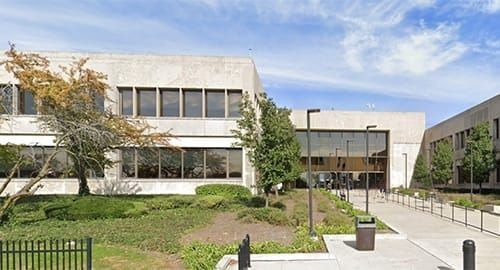
For me, that homework starts on my own beat: watching how often Cook County cases are steered away from juries, how judges and prosecutors use their discretion in pretrial hearings and plea negotiations, and how willing local boards are to push sensitive discussions behind closed doors. Collins may have been talking about South Carolina, but the questions he raised land just as hard at 26th and California, the city’s shorthand for the George N. Leighton Criminal Court Building.
Collins has spent more than fifty years standing in real courtrooms, asking ordinary citizens in the jury box to decide his clients’ cases. For him, “give me that jury every time” isn’t just a line; it’s a philosophy about who should hold power when the state comes knocking.
For those of us with bylines instead of bar cards, the assignment is to learn to recognize that power, too: who has it, who is supposed to check it, and what happens when those checks disappear from view.