Are the writers of SVU taking a page from Cook County's criminal justice playbook?
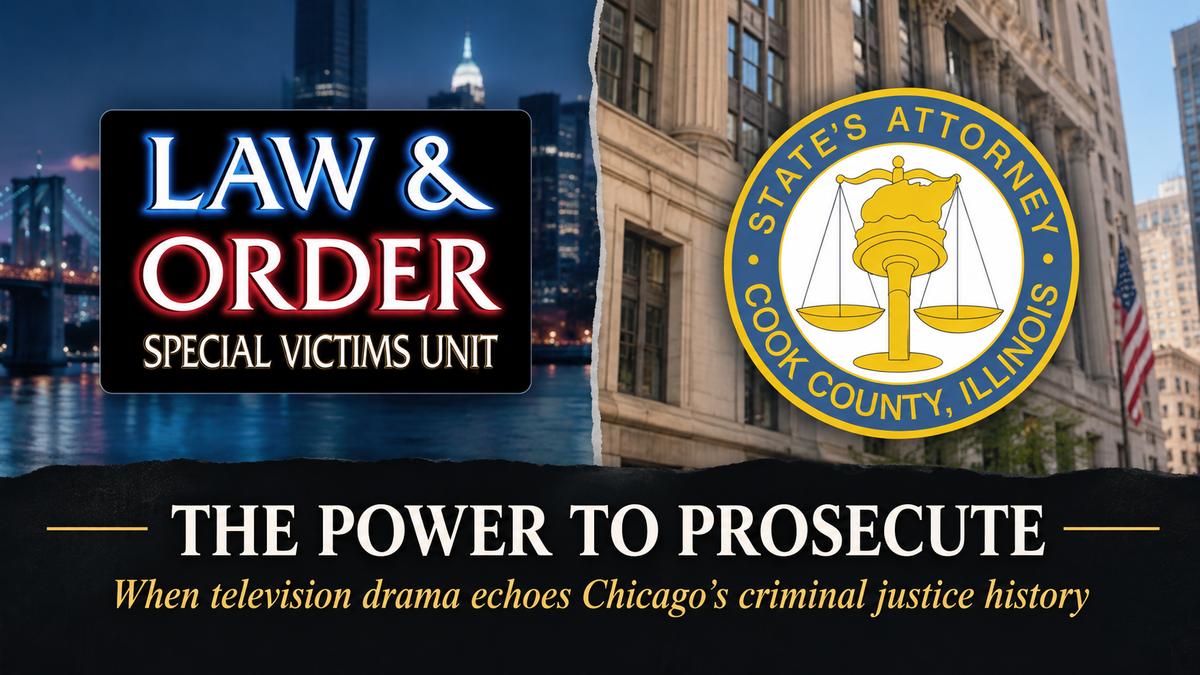
The season premiere raises troubling questions about prosecutorial discretion and how far investigators should go to secure a conviction.
Law & Order: Special Victims Unit is one of the longest-running crime shows in television history, but I hadn't paid much attention to it until a couple of years ago.
It was only around the time I started observing Cook County courtrooms that I discovered SVU — the series starring Captain Olivia Benson played by Mariska Hargitay, along with her second-in-command Fin Tutuola, played by Ice-T, along with a revolving cast of detectives, victims, witnesses, perpetrators and prosecutors who show us how criminal cases unfold in New York City.
The creativity is in the types of cases the writers come up with every season. They give viewers a peek into how law, culture, technology and public opinion impact crime and crime fighting in New York. I don't doubt that the writers spend many hours inside of the state's criminal courtrooms.
But Thursday night's season premiere made me wonder whether the writers of SVU are now taking inspiration from Illinois criminal courtrooms.
Does Captain Benson cross the line?
The episode involved a patient who, after being served half a dozen drinks, couldn't clearly remember what had happened to her. As Captain Benson investigated the allegations against three co-defendants, she initially tried to build her case by the book. During their initial meeting at the hospital, Benson stopped short of scolding a nurse who was feeding answers to the patient.
But the woman's memory wasn't enough to obtain a conviction. After deliberating, the jury couldn't reach a unanimous verdict on whether what happened was a crime or consent. The judge declared a mistrial.
Afterward, a jury consultant advised Benson to change her strategy. Rather than uncover more evidence, Benson turned to a different tactic.
In a scene that felt like a "welcome to the dark side" moment, Captain Benson walks down a long white hallway to the home of Aidan Hawkins, a new assistant district attorney played by Jelani Alladin. When he opens the door, she proposes threatening a suspect's mother with an obstruction charge.
There was just one problem. Nothing Benson had uncovered suggested the mother had obstructed the investigation. In fact, the mother had helped by providing video evidence implicating her son and two co-defendants.
Benson seemed surprised when Hawkins appeared impressed by her proposal. He agreed with the plan, suggested adding a conspiracy charge and invited her inside.
Captain Benson seemed surprised when ADA Hawkins appeared impressed by the proposal and agreed with the plan and suggested added conspiracy. He invited her inside.
Before the commercial, Captain Benson had stopped someone from suggesting answers to a witness. Now she was asking ADA Hawkins to use the threat of criminal charges to obtain the answers she needed.
The threat worked. To protect his mother, the son agreed to implicate his co-defendants in exchange for a lesser charge and a promise that his mother would be cleared.
I haven't caught up with every episode of the show's more than 25 seasons, but for the most part I've been impressed with the integrity of its lead prosecutor, ADA Sonny Carisi, played by Peter Scanavino. Despite trading his police badge and gun for a suit, tie and briefcase, he's been portrayed as an ethical prosecutor — even as Captain Benson and his former team at SVU continue to consider him one of their own.
While ADA Hawkins approved Benson's proposal to threaten the mother with charges ADA Carisi seemed troubled by threatening an innocent woman with prosecution.
When police and prosecutors coerce cooperation
That's the kind of ethical caution prosecutors should exercise, says Eileen R. Prescott, an assistant professor at the University of Georgia School of Law who previously directed the Accountable Prosecutor Project at Wake Forest University.
Prosecutors have considerable discretion in deciding whom to charge, what charges to bring and whether to negotiate plea agreements. Their decisions can determine whether someone remains in jail, faces years in prison or walks away from a criminal case.
"You want people who are kind of troubled by it their whole careers, because they need to be really thoughtful and careful about what it is they do," Prescott told me in an interview I conducted while she led the project.
Prescott, who previously served as a law clerk with the Cook County State's Attorney's Office, illustrated how prosecutors can become increasingly certain of their judgments after years of litigation. She described the thinking that might lead a prosecutor to rationalize questionable tactics:
"Well, I know he's guilty and I don't quite have what I need. So I can just blur this a little bit, because it's important for public safety that I lock this guy up."
But prosecutorial discretion can also affect people who aren't themselves accused of the underlying crime, especially when the threat of criminal charges is used to obtain statements or testimony against someone else.
That's where the fictional SVU storyline begins to resemble some troubling chapters in Chicago's criminal justice history.
When questionable evidence leads to convictions
Chicago, and the surrounding areas that make up Cook County, has a decades-long history of wrongful convictions involving allegations of coerced confessions and witness statements. Civil rights attorneys and advocates have also accused prosecutors of knowingly relying on evidence obtained through police misconduct to secure convictions
The work of the Illinois Torture Inquiry and Relief Commission has helped expose not only the enduring consequences of police misconduct but also the failure of the criminal justice system to provide an effective check on investigative abuses.
Consider Kevin Jackson, who spent more than two decades in prison after being convicted of a 2001 shooting that killed Ernest Jenkins and wounded Michael Watson at a South Side gas station.
At his trial, four eyewitnesses recanted earlier statements identifying Jackson as the shooter, testifying that Chicago police detectives had threatened or coerced them into making those statements.
Brandy Butler, one of those witnesses, was three months pregnant when detectives questioned her. She testified that detectives threatened to bring criminal charges against her if she failed to identify the shooter. Wanting to leave the police station and return to her children, Butler eventually signed a statement identifying Jackson.
"I just was ready to go because I was harassed," she testified.
Another woman questioned during the investigation, Quiana Davis, later stated in an affidavit that detectives threatened to charge her as an accessory to murder and take away her daughter if she refused to support their version of events. But Davis refused to identify Jackson as the shooter.
The surviving shooting victim, Michael Watson, testified that Jackson looked nothing like the man who shot him. Nevertheless, prosecutors used the disputed eyewitness statements to argue for and win a conviction.
More than two decades later, an independent reinvestigation concluded that Jackson's convictions lacked integrity. In October 2024, the Illinois Appellate Court vacated them.
The power to prosecute
Unlike television audiences, the detectives and prosecutors who investigated Kevin Jackson couldn't know the truth simply because they believed they had found it.
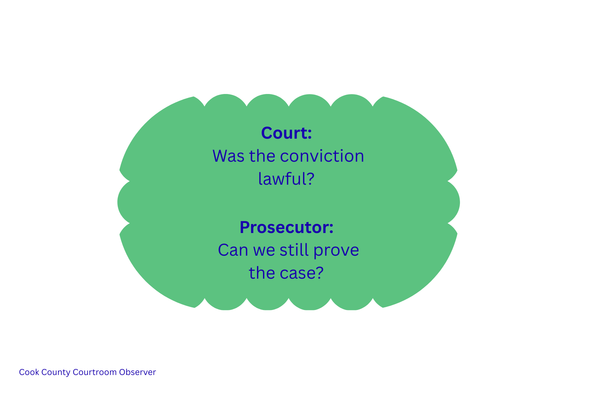
Jackson and other cases like his raise another question: What accountability exists when prosecutors rely on evidence obtained through questionable investigative practices?
In 1976, the U.S. Supreme Court ruled in Imbler v. Pachtman that prosecutors have absolute immunity from federal civil rights lawsuits seeking damages for actions taken in their core prosecutorial roles.
The Court acknowledged the consequences: "This immunity does leave the genuinely wronged defendant without civil redress against a prosecutor whose malicious or dishonest action deprives him of liberty."
Nearly half a century later, that decision remains a cornerstone of prosecutorial immunity. A national report Prescott helped to produce examined how states protect prosecutors from civil liability, including for certain forms of intentional misconduct.
But immunity from civil damages lawsuits does not eliminate prosecutors' ethical obligations. Illinois Rule of Professional Conduct 3.8(a), for example, prohibits prosecutors from pursuing charges they know are unsupported by probable cause.
That rule doesn't necessarily make the mere threat of filing a charge a violation. But it illustrates the professional responsibilities that remain even when prosecutors are protected from civil damages lawsuits.
A conviction at what cost?
In the courtrooms I've observed, the focus is usually on what defendants are accused of doing. Far less attention is paid to the decisions prosecutors make in assembling and pursuing those cases.
But in actual courtrooms, the presumption of innocence exists precisely because guilt must be established through reliable evidence, not assumed by those pursuing the case.
On SVU, the son's cooperation helps prosecutors build their case. But the same tactic that appears effective on television can contribute to a wrongful conviction in real life.
Advocates for ethical prosecution are speaking out about questionable tactics. But thus far few cases have challenged prosecutorial immunity, according to the Accountable Prosecutor Project.
Will SVU hold Benson accountable?
With its large and loyal audience, perhaps the writers of Law & Order: SVU can help viewers better understand the enormous discretion prosecutors exercise and the consequences when that authority is misused.
For decades, the series has invited viewers to trust Olivia Benson's judgment. That's what made her willingness to threaten an innocent woman with prosecution so surprising to me. Will her fans feel the same way?
The season premiere suggests the writers may be ready to explore what happens when a trusted detective begins employing tactics that raise troubling questions about the pursuit of justice.
We'll have to stay tuned to find out whether they challenge Captain Benson's evolving crime-fighting methods or vindicate them because they produce convictions.
After all, Benson got her man.